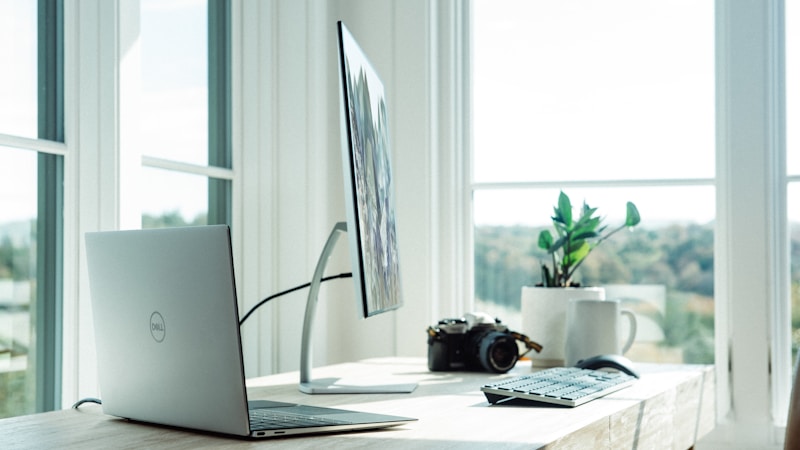
Working From Home vs Co-Working Spaces: Tax Comparison
Which option gives you better tax deductions for your flexible work setup?
37% of Australian workers now work remotely at least part of the time. For many, this means choosing between setting up a home office, joining a co-working space, or doing some combination of both. But here is what most remote workers miss: your choice of workspace dramatically affects your tax deductions, and choosing wrong could cost you hundreds of dollars each year.
The Flexible Work Dilemma: Where Should You Work?
The shift to flexible work has given millions of Australians a choice their parents never had: where to actually do their job. But with that freedom comes confusion.
Many remote workers are wrestling with questions like:
- Is it better to claim home office expenses or pay for a co-working space?
- Can I claim both if I split my time between home and a co-working space?
- What if I work from cafes or libraries instead?
- How do the numbers actually compare?
The frustration is real. You might be paying $400 a month for a co-working hot desk while your colleague claims $600 in home office deductions without spending a cent on dedicated workspace. Or you might be grinding away at home while missing out on professional co-working benefits that could actually save you money after tax.
The truth is there is no one-size-fits-all answer. But understanding the tax rules for each option will help you make a smarter decision for your situation.
Why the Tax Rules Are So Different
The ATO treats home office expenses and co-working expenses completely differently, and understanding why reveals how to optimise your claims.
Home Office: An Apportionment Game
When you work from home, you are using a space that has both personal and work functions. Your electricity powers your lights whether you are working or watching Netflix. Your internet connects you to clients and to YouTube. Because of this mixed use, the ATO requires you to calculate and claim only the work-related portion of these expenses.
Co-Working: A Direct Business Expense
A co-working membership, by contrast, exists solely for work purposes. There is no personal use to separate out. If you pay for a hot desk or private office specifically to do your job, the entire cost is potentially deductible (subject to the usual work-related expense rules).
This fundamental difference shapes everything about how you claim each type of expense.
The Solution: Understanding Both Options in Detail
Option 1: Working From Home Deductions
The ATO provides two methods for claiming home office expenses:
Fixed Rate Method (67 cents per hour)
This simplified method covers:
- Electricity and gas for heating, cooling, and lighting
- Phone and internet usage
- Computer consumables (printer ink, stationery)
- Cleaning of your dedicated work area
Requirements:
- You must have a dedicated workspace (not the kitchen table used by everyone)
- You need to keep records of hours worked from home
- You can additionally claim depreciation on work equipment separately
Actual Cost Method
Calculate and claim the actual work-related portion of each expense:
- Electricity, gas, and home insurance (work percentage)
- Internet and phone (work percentage)
- Office furniture and equipment depreciation
- Repairs and maintenance to home office
This method requires more record-keeping but can result in higher deductions for dedicated home offices.
Option 2: Co-Working Space Deductions
If you pay for co-working space to earn your income, you can claim:
- Membership or desk fees (hot desk, dedicated desk, or private office)
- Meeting room bookings
- Printing and copying charges
- Additional services (mail handling, phone answering)
Importantly, you can claim 100% of these costs if the space is used entirely for work. No apportionment required.
Real Calculation Comparison: Which Saves You More?
Let us compare the tax outcomes for three different remote workers.
Case Study 1: Rachel - Full-Time Home Worker
Situation: Rachel works from home five days per week, 48 weeks per year. She has a dedicated home office.
Fixed Rate Method Calculation:
- Hours: 40 hours x 48 weeks = 1,920 hours
- Fixed rate: 1,920 x $0.67 = $1,286.40
- Plus laptop depreciation (25% of $2,000): $500
- Total deduction: $1,786.40
Co-Working Alternative:
- Hot desk membership: $350/month x 12 = $4,200
- Total deduction: $4,200
Tax Comparison (32.5% rate):
- Home office tax saving: $580
- Co-working tax saving: $1,365
- But co-working costs: $4,200
- Net cost of co-working after tax: $2,835
Verdict: For Rachel, working from home is clearly cheaper. She saves $1,786 in deductions while spending nothing on workspace rental. The co-working space would cost her $2,835 out of pocket after tax benefits.
Case Study 2: Marcus - Part-Time Remote Worker
Situation: Marcus works from home two days per week and uses a co-working space one day per week. He also goes to his employer's office two days per week.
Home Office Deduction:
- Hours: 16 hours x 48 weeks = 768 hours
- Fixed rate: 768 x $0.67 = $514.56
- Equipment depreciation (work use 40%): $200
- Home office total: $714.56
Co-Working Deduction:
- Day pass x 48 days at $45 = $2,160
- Co-working total: $2,160
Combined Deduction: $2,874.56
Verdict: Marcus can claim both his home office expenses for home working days and his co-working costs for those days. The key is he cannot claim home office fixed rate for hours spent at the co-working space.
Case Study 3: Jennifer - Freelancer With Client Meetings
Situation: Jennifer is self-employed and needs a professional meeting space to impress clients. She works from home most days but uses a co-working space with meeting rooms twice a week.
Home Office Deduction (Actual Cost Method):
- Electricity (10% of $2,400): $240
- Internet (60% of $1,200): $720
- Phone (70% of $900): $630
- Home office equipment depreciation: $850
- Office furniture depreciation: $400
- Home office total: $2,840
Co-Working Deduction:
- Part-time membership: $200/month x 12 = $2,400
- Meeting room bookings: $600/year
- Co-working total: $3,000
Combined Deduction: $5,840
Verdict: For Jennifer, the co-working space is a genuine business expense that provides value beyond what her home office can offer. The combined deductions significantly reduce her tax liability, and the professional meeting spaces help her win clients.
The Hybrid Approach: Getting the Best of Both Worlds
Here is what smart remote workers do: they strategically combine home office and co-working deductions to maximise tax benefits while minimising out-of-pocket costs.
Strategy 1: Use Co-Working for Specific Purposes
Instead of a full membership, use day passes or part-time plans for:
- Client meetings requiring professional settings
- Collaborative work sessions with colleagues
- Days when you need networking opportunities
- When your home environment is not suitable (renovations, family commitments)
This way you get co-working benefits when needed while claiming home office deductions for the majority of your work time.
Strategy 2: Compare Your Break-Even Point
Calculate how many hours you would need to work from home to match the deduction from co-working:
Example: A $350/month co-working membership gives you a $4,200 annual deduction.
To match this with the home office fixed rate method:
$4,200 / $0.67 = 6,268 hours (impossible in a year)
But you also pay $4,200 for the co-working space.
The real comparison: Is the benefit of co-working (networking, separation of work and life, professional environment) worth the net after-tax cost to you?
Strategy 3: Maximise Home Office First
If you have a dedicated home office, ensure you are claiming everything available:
- All hours worked from home (tracked accurately)
- Equipment depreciation (laptop, monitor, chair, desk)
- Compare fixed rate versus actual cost method annually
Only add co-working when it provides genuine additional value that exceeds its net cost.
Key Factors in Your Decision
Consider these factors when choosing your workspace strategy:
Choose Home Office Focus If:
- You have a dedicated space that works well for your needs
- You do not need professional meeting spaces regularly
- You want to minimise out-of-pocket expenses
- Your work is primarily independent and does not require collaboration
Consider Co-Working If:
- You need professional meeting spaces for clients
- Your home environment is not conducive to work
- You value networking and community
- You are self-employed and can claim the full cost as a business expense
- Your employer provides a remote work allowance that covers the cost
Use a Hybrid Approach If:
- Your needs vary week to week
- You want the flexibility of both options
- You need occasional access to professional spaces without full-time commitment
How TaxBot Optimises Your Workspace Deductions
- Automatic Hour Tracking: TaxBot detects when you are working from home and logs your hours automatically
- Method Comparison: See in real-time whether fixed rate or actual cost gives you a better deduction
- Co-Working Expense Tracking: Capture membership fees and day passes alongside home office claims
- Deduction Maximiser: Our AI recommends the optimal split between home and co-working based on your patterns
- Equipment Depreciation Calculator: Track the declining value of your home office equipment automatically
TaxBot users with flexible work arrangements claim an average of $1,800 more in workspace deductions than those who guess at the best approach.
Download TaxBot today and let data drive your workspace decisions. Whether you work from home, a co-working space, or both, we will ensure you claim every dollar you deserve.